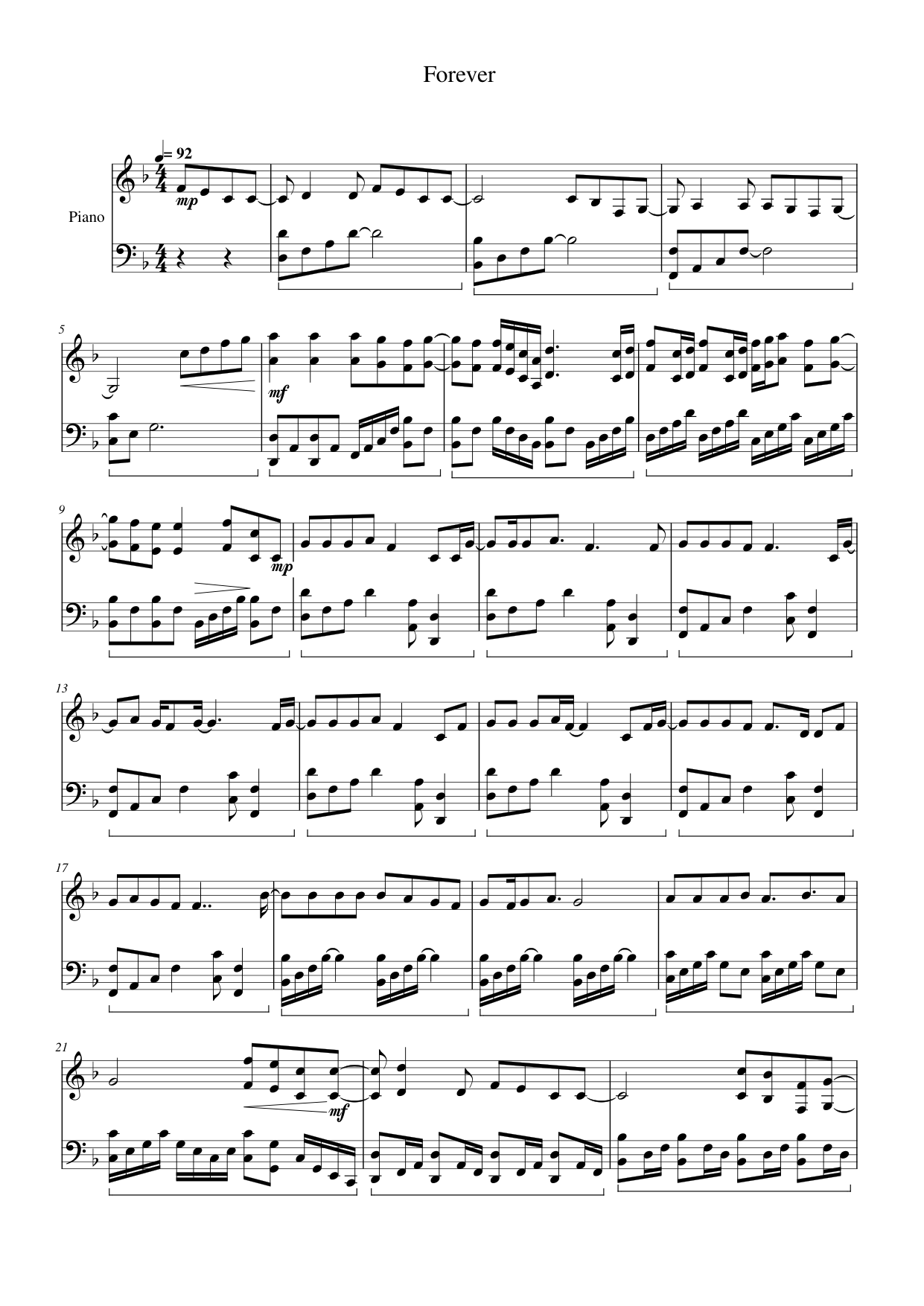
Composer: W. G. Cooper
•
Genre: Christian Hymn
Page 1 of 2 • Lossless 300+ DPI Urtext Standard
Includes complete 2-page Urtext score in G Minor, chord charts, and vocal lyrics.
About This Composition: Wonderful Peace is arranged for solo piano with complete vocal chords and lyrics in the key of G Minor (meter: 4/4, tempo: 127 BPM). Graded at an Easy skill level, this complete 2-page Urtext edition is formatted for standard US Letter (8.5 × 11 in) and International A4 printing.
Authentic voice-leading chord changes for keyboard accompaniment and choir rehearsal.
Send this printable score to piano students, choir partners, or friends:
Complete vocal text formatted for accompaniment and rehearsal
Harmonic architecture, technical challenges, and structured rehearsal syllabus
'Wonderful Peace' occupies a celebrated sanctuary in the canon of sacred hymnody, carrying the indelible artistic voice of W. G. Cooper. Emerged from a profound crucible of personal faith and communal devotion, the hymn inaugurates its poetic journey with the timeless confession "Wonderful Peace". Through historic revivals and centuries of congregational worship, its verses have ministered consolation and steadfast fortitude across multiple generations.
The theological contour of 'Wonderful Peace' unfolds with architectural precision, exploring themes of providence, redemptive grace, and divine communion. Central to the hymn's spiritual momentum is the passage "Wonderful Peace", leading inexorably toward the triumphant certainty voiced in ""Wonderful Peace," is the only known hymn written by Warren D. Cornell, a Methodist minister from Texas. Cornell wrote the hymn in 1889 at a camp meeting near Westbend, Wisconsin, with poet and composer W. G. (George) Cooper. Cooper was…". In modern conservatory performance, it remains both a testament to timeless liturgical craftsmanship and a versatile vehicle for expressive keyboard artistry.
Formulated in G Minor and cast in common meter (4/4), imparting solemn architectural weight and dignified congregational cadence, 'Wonderful Peace' embodies classical hymnodic structure. The harmonic engine relies upon diatonic framework centered on G Minor. The prevailing harmonic sequence (G → IV → V7 → vi → IV → V → G) establishes a solid tonal foundation, balancing stable tonic anchors with expressive subdominant ascents.
Cadential intersections follow classical voice-leading syntax: opening periods culminate in half-cadences (V) that generate forward motion, whereas final stanza closures resolve with authoritative perfect authentic cadences (V7 - I). The counterpoint between soprano and bass lines demonstrates meticulous contrary motion, creating acoustic transparency that ensures every word of the sacred text is underscored by harmonic gravity.
For conservatory-grade pianists, performing 'Wonderful Peace' demands refined keyboard touch to capture clean harmonic projection in G Minor. The primary pedagogical challenge is soprano cantabile voicing: the right hand's 4th and 5th fingers must firmly articulate the melodic line, maintaining an expressive singing curve (mf to f), while the inner thumb and index fingers whisper the harmonic filler notes (p to mp).
Technical execution requires disciplined arm-weight transfer and finger substitution to maintain a seamless four-part vocal legato. Left-hand tenor and bass voices must be voiced with warm depth without overpowering the soprano melody. Regarding pedaling technique, the pianist should execute syncopated (legato) pedaling immediately following each harmonic transition on the downbeats, maintaining clean acoustic decay in reverberant performance spaces.
Artistic rendition of 'Wonderful Peace' transcends mechanical timekeeping through expressive agogic inflection and respiratory phrasing. While nominal tempo is marked at 127 BPM, pianists should employ subtle micro-rubato at phrase peaks and harmonic suspensions, allowing the emotional weight of each stanza to register before launching the subsequent musical thought.
We recommend a four-stage dynamic trajectory mirroring the text's poetic drama:
To achieve flawless technical polish and performance memorization, execute this conservatory practice protocol:
You can download the complete 2-page printable A4 vector PDF directly on Pianist Forum with 1-click. Standard MIDI files are also provided with zero subscription requirements.
Wonderful Peace by W. G. Cooper is composed in G Minor, set to 4/4 time signature, with a performance tempo of 127 BPM.
This arrangement is graded at an Easy skill level, featuring authentic notation across approximately 38 measures.
Yes. All vector scores are engraved with standardized margins designed to print cleanly on both North American standard US Letter (8.5 × 11 in) and international ISO A4 paper.
Sacred & Hymns • Curated Collection
Sacred & Hymns • Curated Collection
Sacred & Hymns • Curated Collection
Sacred & Hymns • Curated Collection
Explore high-resolution printable PDF scores matched by harmonic genre and difficulty.

Kirby Shaw
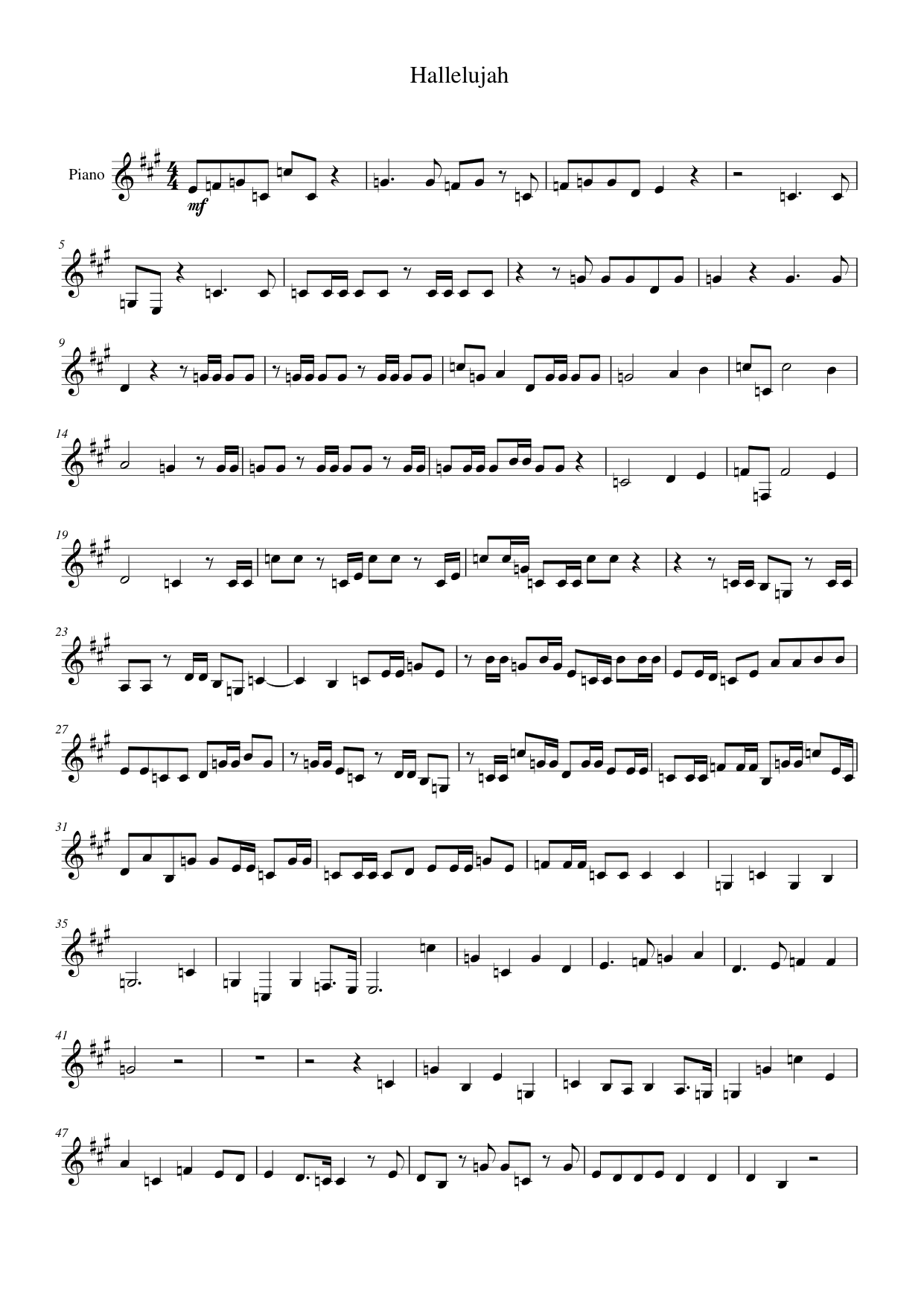
Jeff Buckley
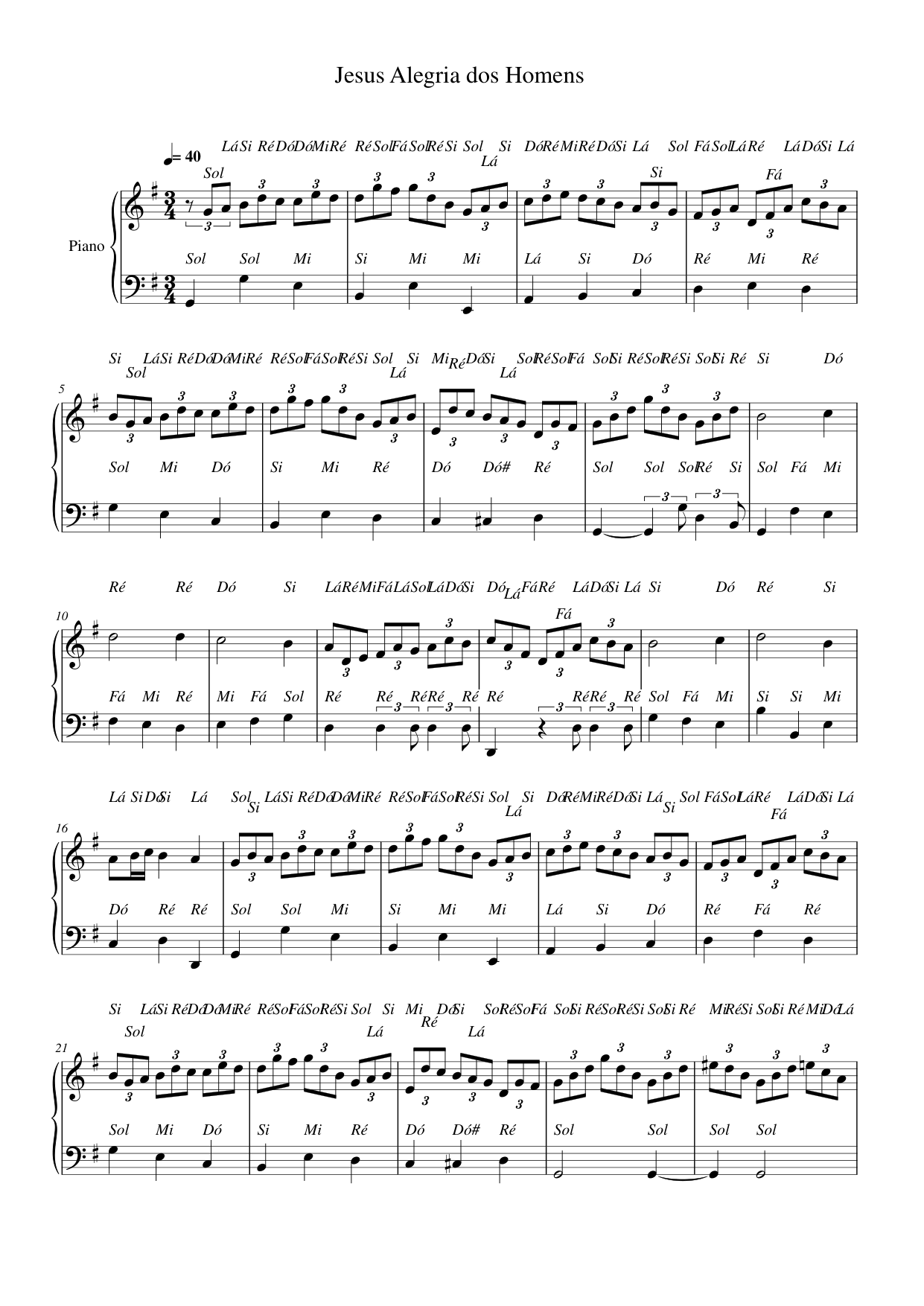
Transcrição Eder Santos

Isaac Watts

Various Artists

Isaac Watts
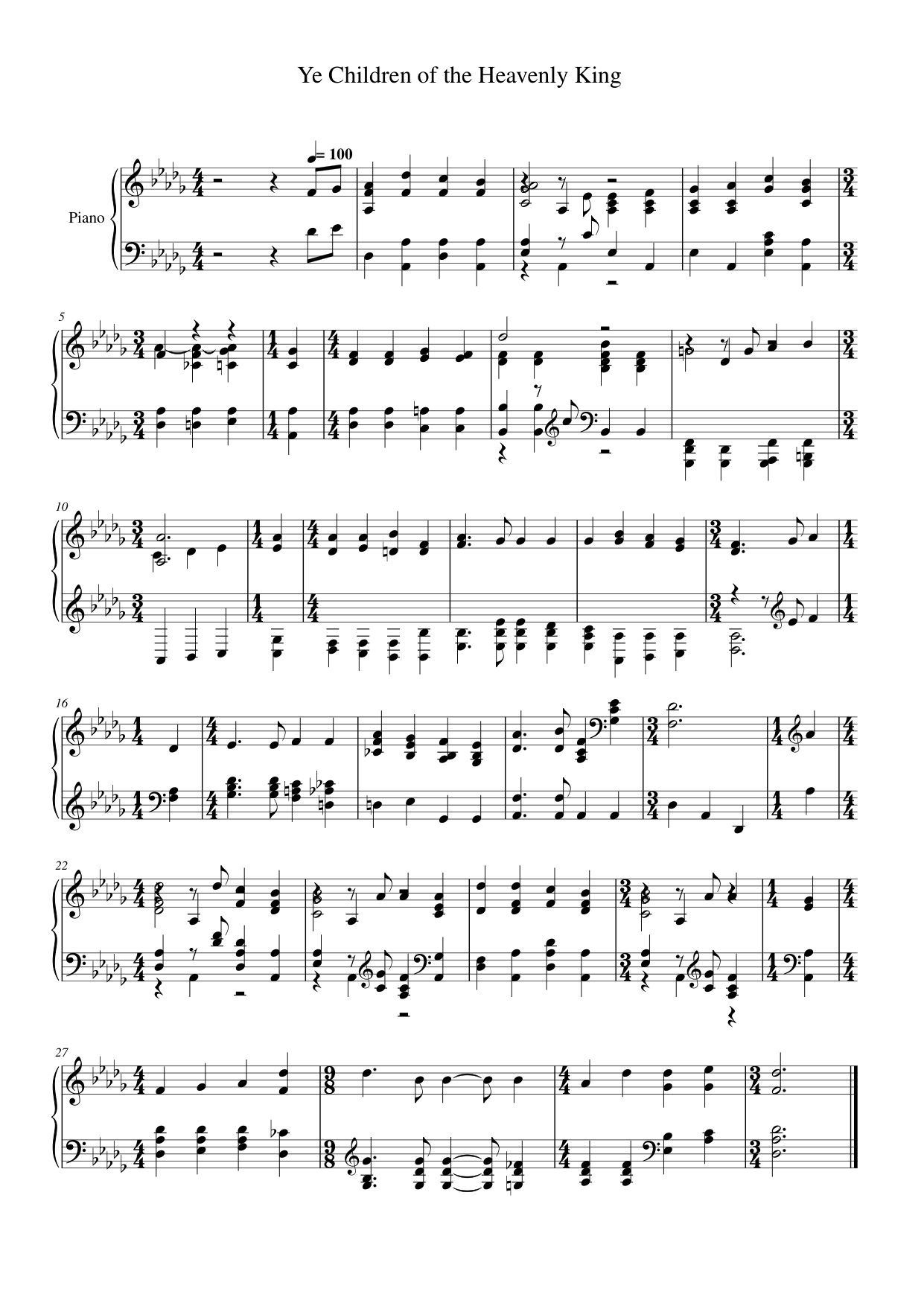
Isaac Watts